

TB Dahilas
Lee's Scarlet Macaw Waterlily Dahlia
Lee's Scarlet Macaw Waterlily Dahlia
Couldn't load pickup availability
Lee's Scarlet Macaw Waterlily Dahlia
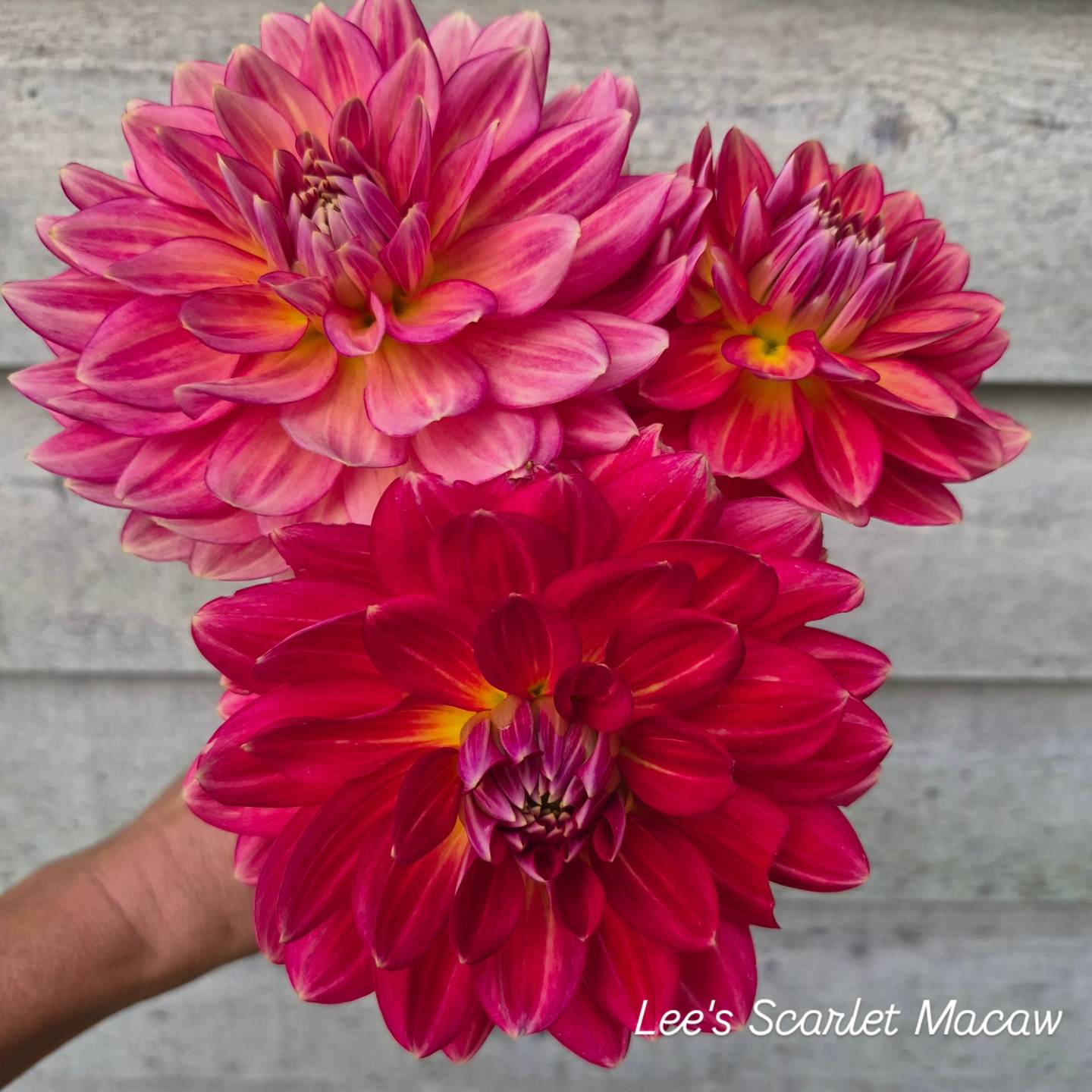
Lee's Scarlet Macaw is a breathtaking Waterlily dahlia bursting with tropical color. Its 4½-inch blooms open in brilliant shades of dark scarlet pink and red, accented by glowing yellow petal bases. As temperatures change throughout the season, the flowers can shift toward softer peachy-pink tones and may develop delicate striping, making each bloom a little different. With its vibrant coloring, elegant form, and prolific blooming habit, Lee's Scarlet Macaw is a true showstopper in both the garden and the vase.
Details
- Form: Waterlily (WL)
- Bloom Size: M — approximately 4½ inches
- Plant Height: Tall — approximately 4½–5 feet
- Stem Strength: Strong
- Unicorn Status: Very Rare
- Primary Color: Dark Scarlet Pink / Red
- Secondary Color: Yellow, with Peachy-Pink tones and occasional striping
- Plant ID: 6668
A Bit of History
Lee's Scarlet Macaw is a newer introduction associated with Lee, and it has quickly developed a following among dahlia collectors and flower growers. It was introduced around 2024 and is especially sought after for its unusual tropical coloring and elegant Waterlily form. Growers love its productivity, with plants producing an abundance of flowers throughout the season.
The color variation is one of its most exciting characteristics. Cooler and warmer temperatures can influence the flowers, causing the blooms to transition from intense scarlet and yellow to softer peachy-pink shades as the season progresses. This natural variation gives the variety incredible depth and makes it a standout for anyone who loves unique, ever-changing dahlias.
Ideal For
- Cutting gardens
- Statement bouquets
- Wedding and event arrangements
- Specialty and collector gardens
Pairs Well With
Lee's Scarlet Macaw makes a gorgeous companion for warm-toned dahlias such as Peaches N' Cream, KA's Mocha Katie, and Cornel Bronze. For a softer, romantic arrangement, pair it with white cosmos, feverfew, blush dahlias, or airy yarrow to let its tropical coloring take center stage.
Share